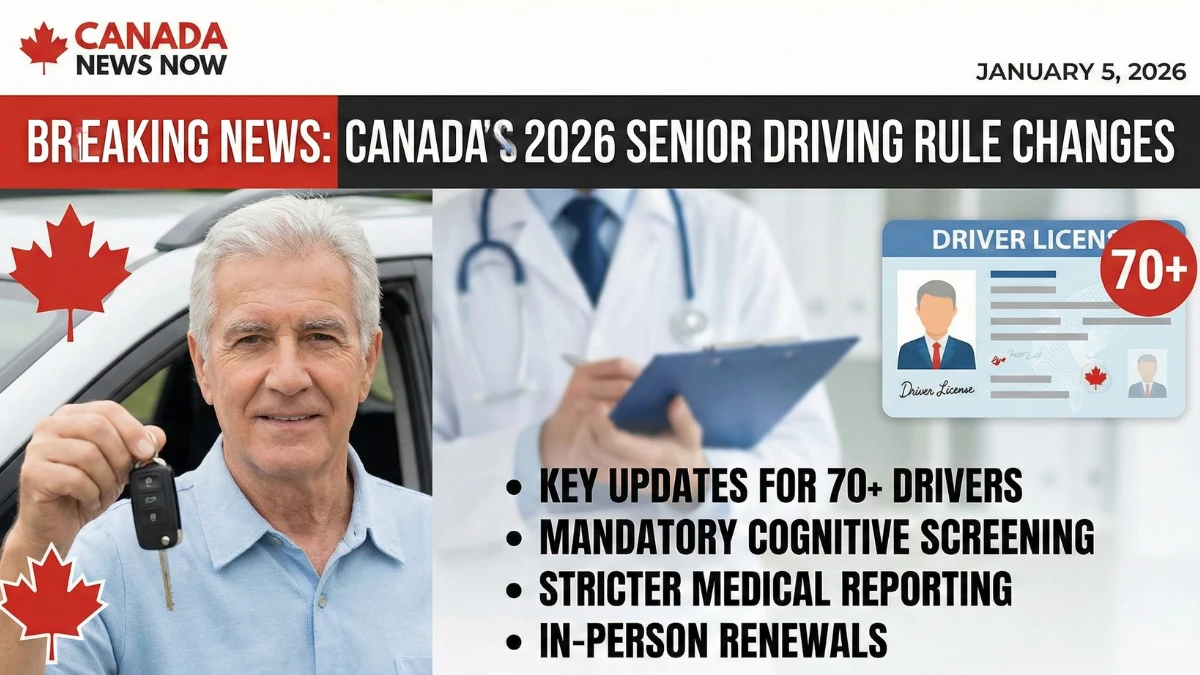
Canada is introducing important driving license rule changes for seniors aged 70 and above in 2026, focusing on road safety, medical fitness, and periodic reassessment while ensuring older drivers can continue driving responsibly and independently.
Why Canada Updated Driving Rules for Senior Drivers
In Canada, the growing senior population and increased road usage have led authorities to modernize licensing rules, balancing public safety concerns with the need to protect senior mobility and independence.
Canada Senior Driving License Changes 2026 – Overview
| Area | What’s Changing in 2026 |
|---|---|
| Age Group Affected | Drivers aged 70 and above |
| Medical Screening | More frequent medical fitness checks |
| Vision Testing | Mandatory regular eye exams |
| License Renewal | Shorter renewal intervals |
| Driving Assessment | On-road or knowledge testing if required |
| Provincial Authority | Rules applied province-wise |
Medical Fitness and Health Reporting Updates
From 2026, senior drivers may be required to submit medical fitness certificates at renewal, covering vision, cognitive ability, and overall health, ensuring drivers remain safe behind the wheel.
Vision and Cognitive Screening Requirements
Authorities are strengthening vision testing standards, with some provinces also introducing cognitive or reaction-time assessments for drivers aged 70+, particularly during renewals or after traffic incidents.
License Renewal Timeline Changes
Senior drivers may face shorter license validity periods, meaning renewals could occur every 1–2 years instead of longer intervals, depending on provincial rules and individual health conditions.
Will Seniors Need to Retake Driving Tests
Not all seniors will need to retake a road test. However, knowledge tests or on-road assessments may be required if medical reviews raise concerns or if a driver has a recent history of accidents or violations.
Impact on Senior Drivers and Families
These changes aim to prevent accidents, encourage early identification of driving risks, and help families plan alternative mobility options when needed, without imposing blanket bans on senior drivers.
How Seniors Can Prepare for 2026 Rule Changes
Drivers aged 70+ should schedule regular eye exams, keep medical records updated, drive defensively, and stay informed about province-specific licensing notices.
Key Points Seniors Must Remember
- Rules apply mainly to drivers aged 70 and above
- Medical and vision checks become more frequent
- Renewal periods may be shorter
- Tests are conditional, not automatic for all seniors
- Provincial rules may vary
Conclusion
The Canada driving license rule changes for seniors in 2026 focus on safer roads without unfairly restricting older drivers, promoting responsible driving through health checks and targeted reassessments rather than age-based bans.
Disclaimer
Driving license rules for seniors vary by province and may change over time. This article is for informational purposes only; seniors should consult provincial transportation authorities for final and legally binding requirements.