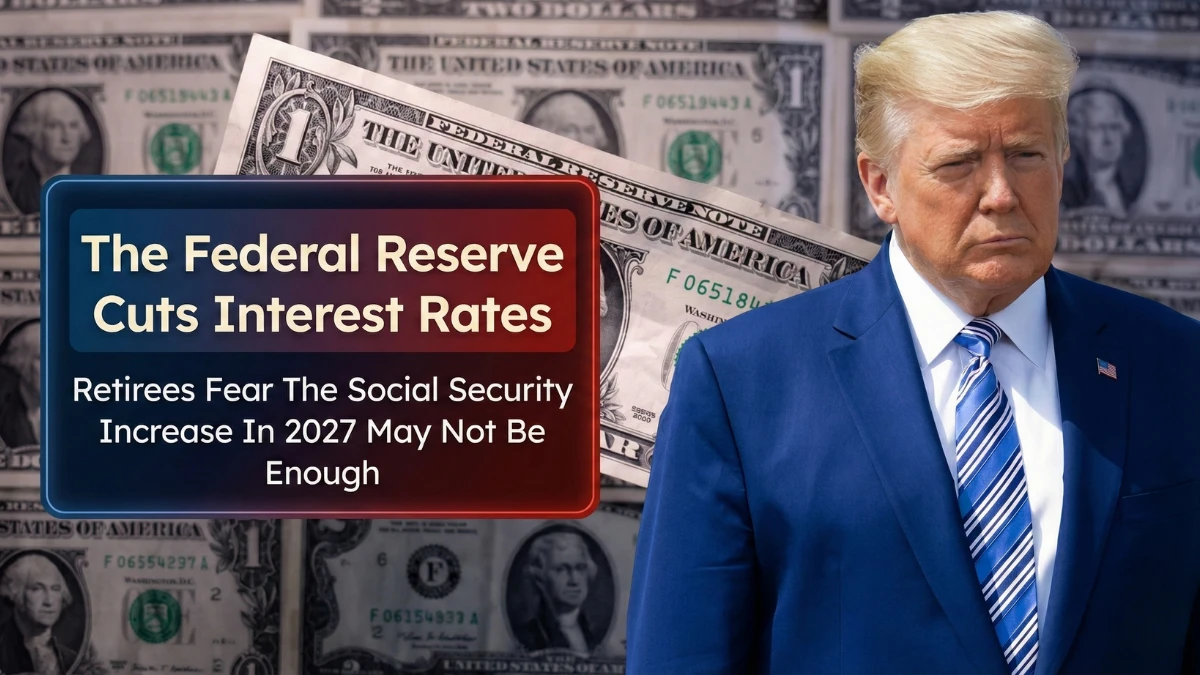
The Federal Reserve’s decision to cut interest rates has sparked fresh concern among retirees, who worry that the Social Security increase in 2027 may not be enough to keep pace with rising living costs. While rate cuts are intended to support economic growth, they can also signal slowing inflation—potentially leading to a smaller Cost-of-Living Adjustment (COLA) for Social Security beneficiaries.
Why the Federal Reserve’s Rate Cut Matters
The interest rate decision by the Federal Reserve directly influences borrowing, savings returns, and inflation trends. When rates are lowered, inflation often cools over time, which can reduce the COLA calculation used to adjust Social Security benefits annually.
Interest Rates and Social Security — Key Link Explained
| Factor | Impact on Retirees |
|---|---|
| Rate Cuts | Lower savings and CD returns |
| Inflation Trend | Potentially weaker COLA |
| Living Costs | Still high for essentials |
| Fixed Income | Less flexibility for retirees |
Why Retirees Are Worried About 2027 COLA
Social Security COLA is calculated using inflation data from the Consumer Price Index for Urban Wage Earners (CPI-W). If inflation slows following rate cuts, the 2027 COLA could be modest, even if retirees continue to face high costs for healthcare, housing, and utilities.
Rising Costs Still Hitting Seniors
Even with easing inflation, many expenses that matter most to seniors—medical care, prescription drugs, insurance premiums, and rent—often rise faster than general inflation. A smaller COLA may fail to reflect these real-world pressures.
What the Social Security Administration Says
The Social Security Administration has emphasized that COLA calculations follow federal law and are strictly tied to inflation metrics. There are currently no guarantees of a minimum increase, even during periods of financial stress for retirees.
Impact on Savings and Fixed-Income Retirees
Lower interest rates also mean reduced returns on savings accounts, CDs, and bonds, cutting into supplemental income many retirees rely on to offset rising costs not fully covered by Social Security.
What Retirees Can Do Now
Retirees may consider reviewing budgets, reassessing investment allocations, and exploring benefit optimization strategies. Staying informed about inflation trends and official COLA announcements can help with early planning.
Key Takeaways
- Federal Reserve rate cuts may reduce future COLA increases
- Retirees face high costs despite slowing inflation
- Social Security adjustments may not match real expenses
- Fixed-income households feel the impact most
Conclusion
The Federal Reserve’s rate cuts may help stabilize the broader economy, but they also raise valid concerns for retirees who depend heavily on Social Security. If inflation cools too much, the 2027 Social Security increase could be smaller than expected, leaving seniors to absorb higher living costs with limited income growth.
Disclaimer
This article is for informational purposes only and does not constitute financial or retirement advice. Future interest rate decisions, inflation levels, and Social Security COLA amounts are subject to change. Readers should rely on official announcements from the Federal Reserve and the Social Security Administration for confirmed information.