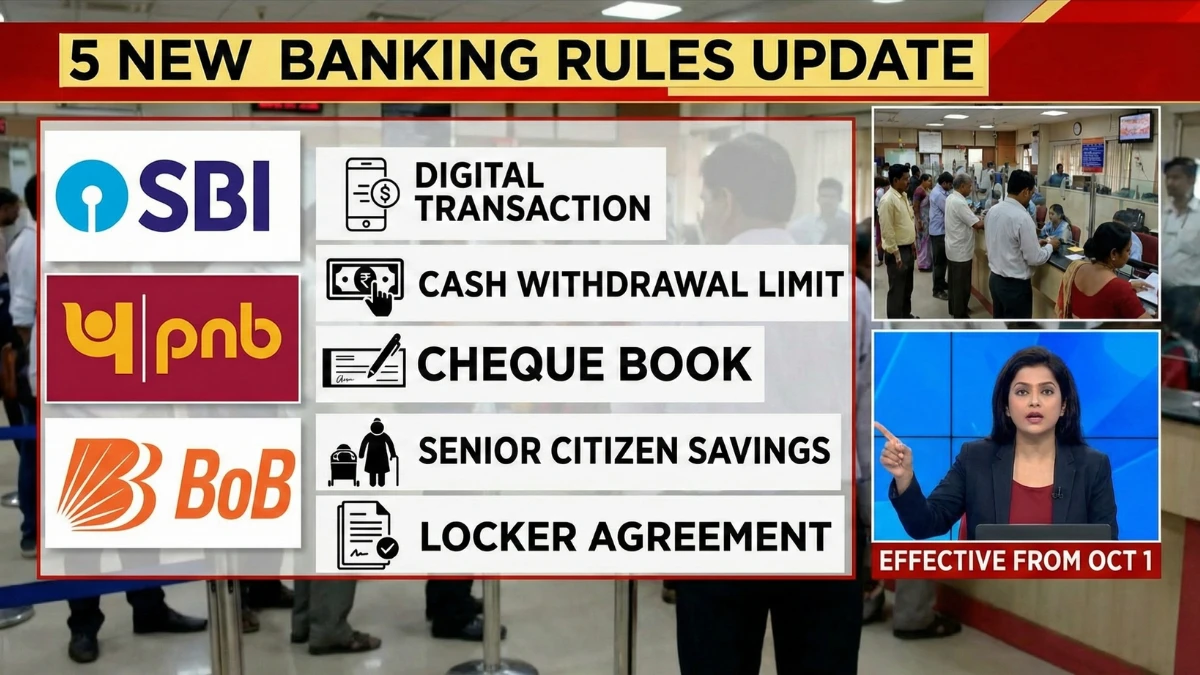
Account holders of SBI, PNB, and Bank of Baroda need to stay alert as five new banking rules have been introduced to strengthen security, improve transparency, and standardize customer services across public sector banks. These changes directly affect savings accounts, KYC compliance, ATM usage, and inactive accounts, making it important for customers to understand what’s new and what action may be required.
Why New Banking Rules Were Introduced
The new rules are part of system-wide reforms to reduce fraud, clean up inactive accounts, and ensure uniform customer protection standards. The changes follow regulatory guidance issued under the supervision of the Reserve Bank of India and are being implemented by leading PSU banks including State Bank of India, Punjab National Bank, and Bank of Baroda.
New Banking Rules 2026 – Quick Overview
| Rule Area | What Has Changed |
|---|---|
| KYC Compliance | Mandatory periodic update |
| Inactive Accounts | Risk of restriction or closure |
| ATM Usage | Revised free transaction limits |
| Debit Card Rules | Charges clarified for inactivity |
| SMS & Email Alerts | Mandatory for transactions |
1. Mandatory KYC Update for All Accounts
Customers must ensure KYC details (Aadhaar, PAN, address, mobile number) are updated. Accounts with incomplete KYC may face transaction restrictions until compliance is completed.
2. Inactive and Dormant Accounts Under Review
Accounts with no transactions for long periods may be marked inactive. Banks may restrict services or initiate closure after due notice, encouraging customers to keep accounts active.
3. Changes in ATM Free Transaction Limits
Free ATM withdrawals are capped as per revised norms. Once the limit is crossed, fixed charges per transaction will apply, even at the bank’s own ATM in some cases.
4. Debit Card Charges for Non-Usage
Debit cards that remain unused for extended periods may attract annual or maintenance charges unless the customer opts out or cancels the card.
5. Mandatory Transaction Alerts
Banks now require customers to keep SMS and email alerts enabled for transparency and fraud prevention. Accounts without verified contact details may face service limitations.
What Account Holders Should Do Immediately
Customers should update KYC, verify mobile and email details, review ATM usage patterns, and close unnecessary or duplicate accounts to avoid penalties or disruptions.
Key Highlights for SBI, PNB & BoB Customers
- Five new banking rules now in effect
- KYC and account activity under strict monitoring
- ATM and debit card charges clarified
- Inactive accounts face possible restrictions
Conclusion
The new banking rules for SBI, PNB, and Bank of Baroda account holders are designed to improve safety, efficiency, and transparency. While most active and compliant customers will see minimal impact, staying updated and completing required actions will ensure uninterrupted banking services.
Disclaimer
This article is for informational purposes only and is based on regulatory guidance and bank-level policy updates available at the time of writing. Exact charges, timelines, and enforcement may vary slightly by bank. Customers should check official bank notifications or contact their branch for final confirmation.