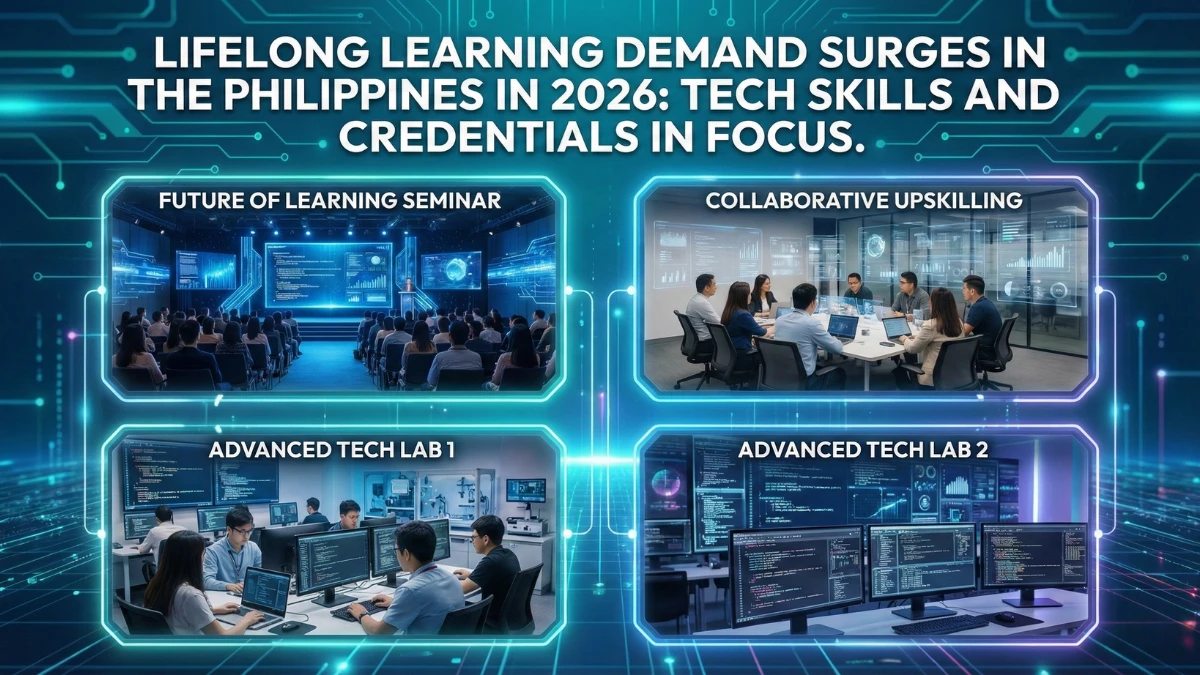
The Philippines is witnessing a sharp surge in lifelong learning demand in 2026, driven by rapid digital transformation, evolving job requirements, and a strong national push toward tech skills, micro-credentials, and industry-recognized certifications as workers adapt to a competitive global economy.
Why Lifelong Learning Is Accelerating in the Philippines
In Philippines, rising automation, AI adoption, and remote work opportunities are reshaping employment expectations, prompting professionals, students, and mid-career workers to continuously upgrade skills to remain relevant and employable.
Lifelong Learning Trends in the Philippines 2026
| Focus Area | Key Developments |
|---|---|
| High-Demand Skills | AI, data analytics, cybersecurity, cloud computing |
| Learning Format | Online, hybrid, self-paced programs |
| Credentials | Micro-credentials, digital certificates |
| Target Learners | Students, professionals, career switchers |
| Employer Role | Skills-based hiring and promotion |
| Government Support | Upskilling and reskilling initiatives |
Technology Skills Driving the Learning Shift
The growing need for software development, data science, digital marketing, and IT support roles has made tech-focused education the most sought-after segment of lifelong learning in 2026, with learners prioritizing job-ready and practical skills.
Rise of Micro-Credentials and Short-Term Certifications
Instead of long academic degrees, many Filipinos are choosing short-term credentials that offer faster completion, lower cost, and direct career impact, making certifications a powerful alternative pathway to employment and advancement.
Impact on Workforce and Employers
Employers are increasingly valuing skills-based qualifications over traditional degrees, encouraging workers to pursue continuous learning while organizations benefit from a future-ready, adaptable workforce.
Key Reasons Lifelong Learning Is Gaining Momentum
- Rapid digital transformation across industries
- Higher demand for tech and future-ready skills
- Flexible online learning access nationwide
- Employer preference for certified skill sets
- Career resilience amid economic uncertainty
Conclusion
The lifelong learning surge in the Philippines in 2026 reflects a major shift toward continuous upskilling, with technology skills and professional credentials emerging as essential tools for long-term career growth, workforce resilience, and national competitiveness.
Disclaimer
Trends and insights mentioned in this article are based on industry observations and may evolve as education policies, labor market conditions, and technology adoption change.