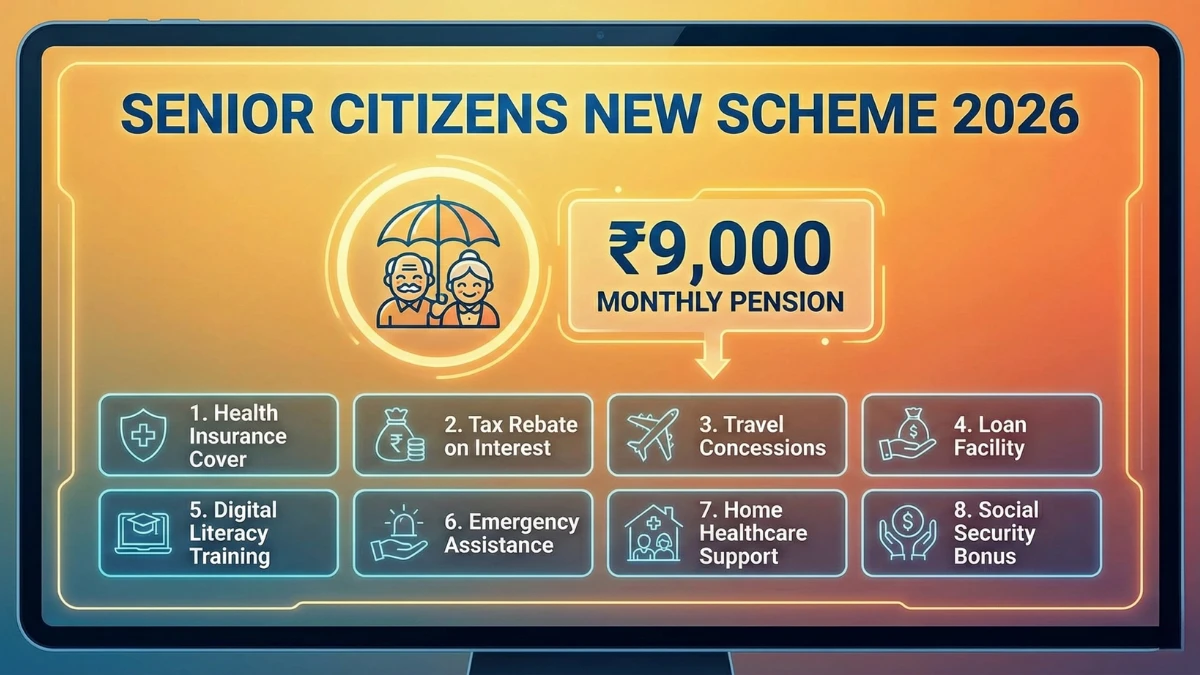
The Senior Citizens New Scheme 2026 has sparked wide discussion after reports highlighted a proposed ₹9,000 monthly pension along with eight major benefits aimed at strengthening financial security, healthcare access, and social protection for elderly citizens. While not all elements are universally implemented yet, the Government of India is actively reviewing and expanding senior-focused welfare measures to address rising living and medical costs.
What the 2026 Senior Citizens Scheme Is About
The initiative brings together income support, health coverage, banking relief, and simplified access to welfare, consolidating multiple benefits so seniors can receive predictable monthly support and easier services rather than fragmented assistance.
Senior Citizens Scheme 2026: Snapshot
| Component | What’s Being Discussed |
|---|---|
| Monthly Pension | Up to ₹9,000 (proposal/combined benefits) |
| Healthcare | Expanded subsidised care |
| Insurance | Improved coverage access |
| Banking | Higher interest & relaxed norms |
| Tax Relief | Enhanced deductions/exemptions |
| Utilities | Concessions/priority services |
| Travel | Wider discounts |
| Welfare Access | Faster DBT & digital verification |
₹9,000 Monthly Pension: How It’s Interpreted
The ₹9,000 figure is commonly cited as a targeted or combined monthly support level achievable through central/state pensions, top-ups, and linked benefits, rather than a single, automatic payout for all seniors. Actual amounts depend on eligibility, state rules, and scheme combination.
8 Major Benefits Being Rolled Out or Strengthened
- Higher Pension Support – Improved monthly income through central/state schemes and add-ons
- Healthcare Relief – Subsidised medicines, diagnostics, and priority treatment
- Insurance Access – Easier enrollment and better coverage options
- Banking Benefits – Extra interest, simplified KYC, priority service
- Tax Relief – Higher exemptions and deductions for seniors
- Utility Concessions – Relief on select services and faster grievance handling
- Travel Discounts – Concessions on public transport
- Simplified Welfare Delivery – Faster Direct Benefit Transfer (DBT) and digital life certificates
Who Can Benefit
Eligibility generally covers senior citizens aged 60+, including retirees, pensioners, widows, and low-income elderly, subject to income criteria and state-wise implementation.
How Payments and Benefits Are Delivered
Most cash benefits are credited directly to bank accounts via DBT, while non-cash benefits (healthcare, travel, utilities) are provided through registered IDs and scheme enrollment.
What Seniors Should Do Now
Seniors should update Aadhaar–bank linkage, verify enrollment in central and state pension schemes, keep documents current, and track official notifications to understand exact amounts and timelines applicable in their state.
Key Points to Remember
- ₹9,000 is a proposed/combined support figure, not universal
- Benefits vary by eligibility and state
- DBT ensures timely payments
- Healthcare and banking relief are core pillars
- Official notices will confirm specifics
Conclusion
The Senior Citizens New Scheme 2026 reflects a strong policy push to improve income security, healthcare access, and ease of living for elderly Indians. While the ₹9,000 monthly pension is best viewed as a targeted or combined support level, the broader package of eight benefits marks meaningful progress toward dignified ageing.
Disclaimer
This article is for informational purposes only. Final benefit amounts, eligibility rules, and implementation timelines depend on official central and state government notifications. Seniors should rely on authorised sources for confirmed details.