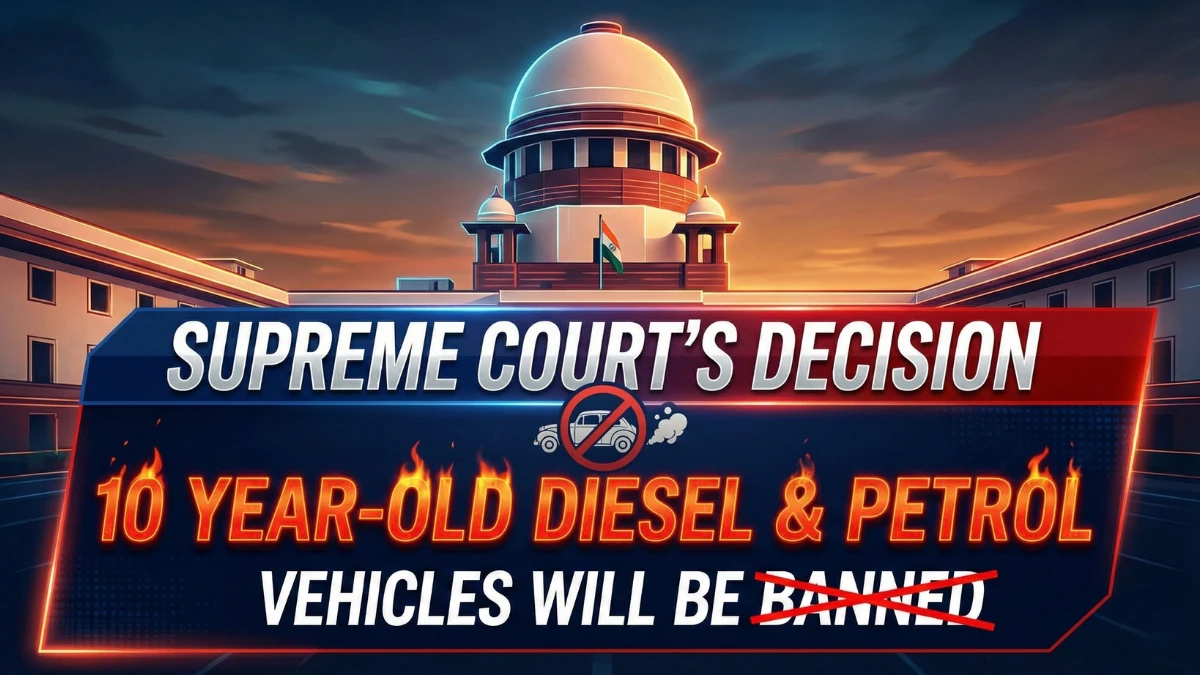
A major Supreme Court decision has put the spotlight on old petrol and diesel vehicles, with directions that effectively bar the use of ageing vehicles in pollution-hit regions. The move targets worsening air quality and public health risks, signalling stricter enforcement against end-of-life internal combustion vehicles and pushing states toward cleaner mobility solutions.
What the Supreme Court Ordered
The directions stem from environmental protection measures issued by the Supreme Court of India, empowering authorities to restrict or prohibit the operation of older petrol and diesel vehicles that exceed prescribed age limits, especially in high-pollution zones.
Vehicle Age Limits — At a Glance
| Fuel Type | Maximum Age Permitted |
|---|---|
| Diesel Vehicles | 10 years |
| Petrol Vehicles | 15 years |
| Affected Areas | High-pollution / notified regions |
| Enforcement | Registration & on-road use |
Why Older Vehicles Are Being Restricted
Older vehicles typically fail to meet modern emission norms, releasing higher levels of particulate matter and NOx. The court’s stance reinforces the polluter-pays principle and prioritizes public health by accelerating the phase-out of high-emission vehicles.
What This Means for Vehicle Owners
Owners of vehicles nearing or crossing the age limit may face registration restrictions, fines, or seizure if driven in notified areas. Scrappage, relocation to permitted regions (where allowed), or switching to cleaner alternatives (EVs/CNG) are the practical options.
Impact on Cities and Transport
The order strengthens local administrations’ hands to improve air quality, supports vehicle scrappage policies, and nudges consumers toward newer BS-VI vehicles and EVs. Commercial fleets may need faster turnover to stay compliant.
Key Takeaways
- Diesel vehicles older than 10 years face bans in notified zones
- Petrol vehicles have a higher age cap but face similar scrutiny
- Enforcement includes registration and on-road restrictions
- Scrappage and cleaner alternatives encouraged
Conclusion
The Supreme Court’s direction marks a decisive step toward cleaner air by tightening rules on ageing petrol and diesel vehicles. While the impact varies by region, owners should proactively check local notifications, plan compliance, and consider cleaner mobility options to avoid penalties.
Disclaimer
This article is for informational purposes only. Applicability, enforcement timelines, and exemptions depend on state and local notifications issued pursuant to court directions. Vehicle owners should verify current rules with transport authorities before taking action.