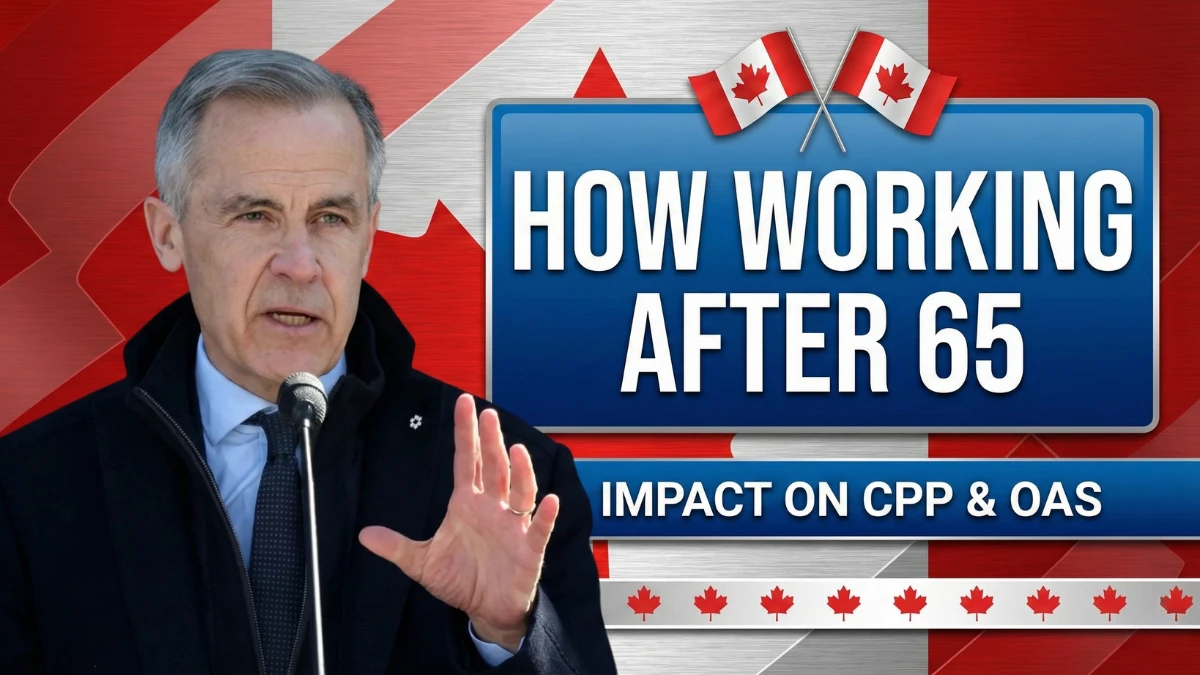
Working beyond age 65 in 2026 can significantly affect your Canada Pension Plan (CPP) and Old Age Security (OAS) payments, as updated rules continue to encourage longer workforce participation while adjusting how benefits are calculated, increased, or clawed back based on income.
Why Canada Encourages Working After 65
In Canada, longer life expectancy and labor shortages have led policymakers to allow seniors to earn income while receiving pensions, giving flexibility to boost retirement income without fully sacrificing government benefits.
CPP and OAS Impact Overview for 2026
| Benefit | Impact When Working After 65 |
|---|---|
| CPP | Can increase through post-retirement contributions |
| OAS | May be reduced due to income-based clawback |
| CPP PRB | Additional lifetime benefit earned |
| OAS Deferral | Higher monthly OAS if delayed |
| Tax Impact | Employment income may affect net benefits |
How Working After 65 Affects CPP in 2026
If you work while receiving CPP, you may continue making CPP contributions, which generate a Post-Retirement Benefit (PRB)—a permanent increase added to your monthly CPP. This means working longer can directly raise your CPP income for life.
How Employment Income Impacts OAS
OAS is income-tested, and higher employment earnings can trigger the OAS recovery tax (clawback). In 2026, seniors with income above the annual threshold may see partial or full OAS reductions, even though CPP remains unaffected by clawbacks.
Should You Defer CPP or OAS While Working
Many seniors choose to defer CPP (up to age 70) or delay OAS, increasing monthly payments substantially. This strategy can be especially beneficial for healthy seniors with stable employment income.
Key Changes and Points Seniors Must Know
- CPP can increase through post-retirement contributions
- OAS may be reduced if income exceeds clawback limits
- Deferring CPP or OAS raises future monthly payments
- Working after 65 is fully legal and encouraged
- Tax planning is essential to maximize net benefits
Conclusion
In 2026, working after age 65 can be a smart financial move if planned carefully. While CPP can grow through continued work, OAS requires income monitoring to avoid clawbacks. Strategic deferral and tax planning can help seniors maximize lifetime retirement income.
Disclaimer
CPP and OAS rules, thresholds, and clawback limits are subject to annual government adjustments. Individuals should consult Service Canada or a qualified financial advisor for personalized guidance.